 blog
blog
Professional Deep Cleaning vs Standard: What's the Difference?
Table of Contents
- Professional Deep Cleaning vs Standard Cleaning: The Key Differences
- The Standard Cleaning Checklist: What Routine Upkeep Covers
- The Deep Cleaning Checklist: Tasks That Go Beyond Routine
- How Long Does Deep Cleaning Take Compared to Standard Cleaning?
- How Often Should You Deep Clean a Rental Property?
- When to Choose a Standard Clean vs a Deep Clean
- Pricing, Preparation, and What to Expect After the Clean
- Conclusion: Matching the Service to Your Situation
- Frequently Asked Questions
Last Updated: October 12, 2026
Professional Deep Cleaning vs Standard Cleaning: The Key Differences
The difference between professional deep cleaning vs standard cleaning comes down to scope: standard cleaning maintains a space that is already in good shape, while deep cleaning resets it by removing built-up grime from surfaces routine visits skip. At Pro Edge Cleaners, we explain it to clients this way: a standard clean is upkeep, a deep clean is a reset. The two services are not interchangeable, and choosing the wrong one is the most common booking mistake we see.
Standard cleaning is scheduled maintenance of a home or rental that is already reasonably clean. Deep cleaning is an intensive, top-to-bottom service that targets accumulated dirt, grease, and soap scum in hard-to-reach areas.
The line between them matters most for rental properties, where turnover condition decides whether a unit shows well.
The Standard Cleaning Checklist: What Routine Upkeep Covers
A standard cleaning checklist covers the visible, high-touch surfaces you use every day. It assumes the home is already in decent condition and focuses on keeping it that way.
Typical standard cleaning tasks include:
- Vacuuming carpets and rugs, and mopping hard floors
- Wiping down kitchen counters, cabinet fronts, and the stovetop
- Cleaning and sanitizing bathroom fixtures, toilets, and mirrors
- Dusting accessible surfaces, furniture, and light fixtures within reach
- Wiping high-touch surfaces such as light switches, handles, and remotes
- Taking out trash and replacing liners
What a standard clean does not include is just as important: baseboards, doors and trim, window sills, inside the oven, inside the refrigerator, and under appliances are all outside its scope. Many businesses find that clarifying these exclusions up front prevents the callbacks that frustrate both clients and cleaners.
The Deep Cleaning Checklist: Tasks That Go Beyond Routine
A deep cleaning checklist adds the detailed work that routine upkeep skips. This is where a service earns the "deep" label, and where the level of detail separates a thorough job from a surface-level one.
Deep cleaning tasks typically include everything in a standard clean, plus:
- Scrubbing baseboards, doors, trim, and window sills
- Cleaning inside the oven and inside the refrigerator
- Wiping down cabinet interiors and cabinet fronts
- Moving and cleaning under appliances where safe to do so
- Removing soap scum and grease from tile, grout, and range hoods
- Dusting and wiping light fixtures, vents, and ceiling fans
- Cleaning hard-to-reach areas behind and beneath furniture
The scope of work is broader, the labor hours are higher, and the results last longer because the underlying grime is gone.
How Long Does Deep Cleaning Take Compared to Standard Cleaning?
Deep cleaning takes roughly two to three times as long as a standard clean, though the exact time depends on home size, home condition, and how long it has been since the last deep clean.
For a typical home, a standard clean runs one to two hours, while a deep clean can run three to six hours or more. A first-time deep clean on a neglected property sits at the top of that range. A well-maintained home getting its seasonal reset sits lower. Cleaning time also climbs with add-on services like interior windows or appliance interiors.
| Factor | Standard Clean | Deep Clean |
|---|---|---|
| Typical duration | 1-2 hours | 3-6 hours |
| Scope of work | Visible surfaces | Surfaces plus edges, trim, interiors |
| Best for | Routine upkeep | Resetting a neglected space |
| Recommended frequency | Weekly to biweekly | Every 3-6 months |
| Labor hours | Lower | Higher |
How Often Should You Deep Clean a Rental Property?
Deep clean a rental property at every tenant turnover, and schedule a seasonal deep clean every three to six months for occupied units. Between those resets, standard cleaning on a weekly or biweekly schedule keeps the property presentable.
For short-term rentals, the frequency is different. High guest turnover means cleaning frequency stays high, and a deep clean between peak seasons protects ratings. A common approach among hosts is to build one deep clean into the calendar each quarter, then rely on standard cleans for each turnover.
For landlords, the turnover deep clean is non-negotiable. It is the visit that addresses built-up grime left by a previous tenant and prepares the unit for showing. Skipping it is how small issues become deposit disputes.
When to Choose a Standard Clean vs a Deep Clean
Choose a standard clean when the space is already maintained and you simply need routine upkeep. Choose a deep clean when grime has accumulated, when the property is changing hands, or when it has been months since the last thorough clean. The harder question is what to do when your situation sits between those two poles, which is most of the time.
A decision framework helps. Work through these four questions in order:
- How long since the last thorough clean? Under four weeks with regular upkeep points to standard. Over eight weeks, or unknown history, points to deep.
- What condition is the space in right now? Visible buildup on baseboards, grout, or appliance interiors means a deep clean is the only service that will actually reset it.
- Is the household changing? Move-in, move-out, post-renovation, a new pet, or a new baby all shift the answer toward deep.
- Does anyone in the home have allergies or asthma? Deep clean first, then standard maintenance on a tighter interval.
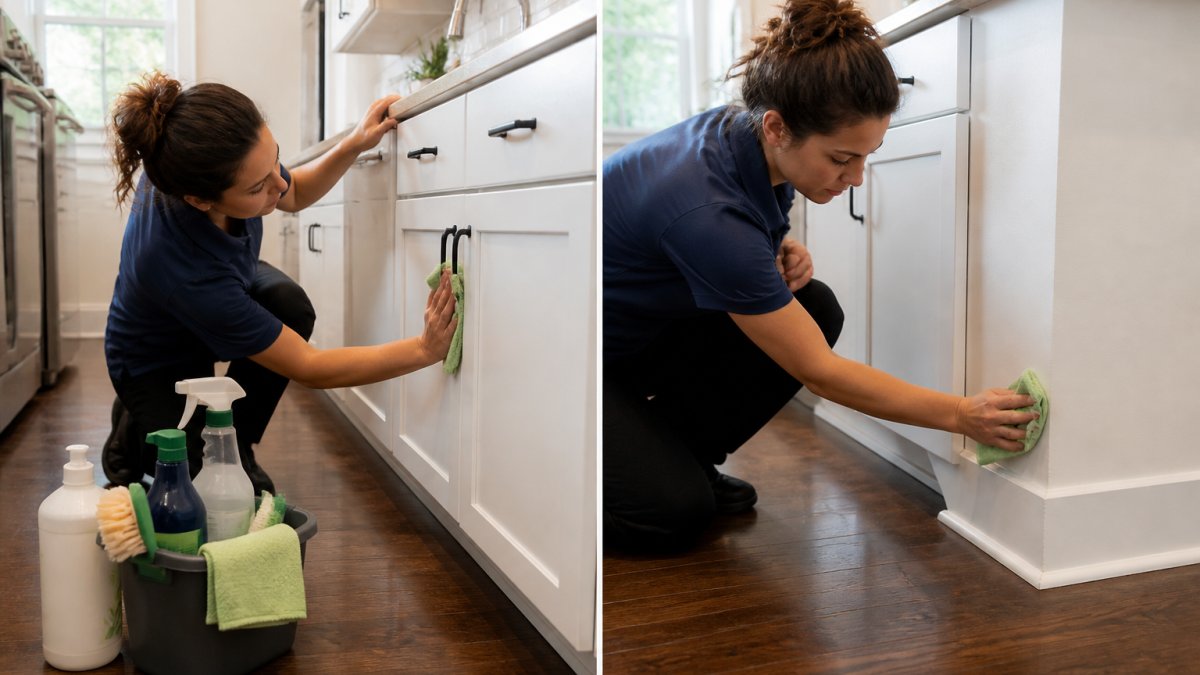
Use this household-specific guidance:
- Recently cleaned home, light use: standard clean on a recurring schedule
- New rental, first clean, or post-renovation: deep clean
- Allergies or asthma in the household: deep clean, then standard maintenance
- Move-in or move-out: deep clean, always
- Pet owners or smokers: deep clean more often than the standard interval
- Long gap between cleans (three months or more): deep clean, regardless of how tidy the space looks
- Short-term rental between peak seasons: deep clean, then standard turnover cleans
A few situations are commonly misjudged. A home that looks tidy can still need a deep clean if the last one was more than a season ago, because buildup hides in the places routine visits skip. A home that looks messy does not automatically need a deep clean if the mess is clutter rather than grime; decluttering first, then a standard clean, is often the better spend. And a property that has just been deep cleaned does not need another one the following month, no matter how it is being used.
If you are unsure, ask a provider to walk the space with you. A short assessment removes the guesswork and gives you a scope you can compare across quotes.
Pricing, Preparation, and What to Expect After the Clean
Pricing for both services depends on home size, home condition, service frequency, and any add-on services you request. Because those factors vary so widely from one property to the next, we quote each job individually rather than publishing a flat rate. Current pricing is available on the Pro Edge Cleaners pricing page.
What drives the quote is worth understanding before you compare providers, because two quotes for the same square footage can differ by a wide margin for reasons that have nothing to do with quality:
- Home size and number of bathrooms. Bathrooms and kitchens carry the highest per-room labor, so a three-bath home prices differently than a one-bath of the same square footage.
- Current condition. A first-time deep clean on a neglected property takes longer than a seasonal reset on a maintained one, and the quote should reflect that.
- Frequency. Recurring standard cleans are typically priced lower per visit than one-time cleans because the work is predictable and the home stays ahead of buildup.
- Add-ons. Interior windows, inside the oven, inside the refrigerator, inside cabinets, and garage or basement areas are commonly priced separately. Ask which tasks are included and which are add-ons before you book, not after.
- Access and layout. Stairs, tight parking, and multi-floor homes add time. So does a space that requires moving heavy furniture.
A common pattern is for providers to quote a deep clean as a flat rate for the first visit, then offer a lower recurring rate for standard cleans afterward. If a quote seems unusually low, ask what is excluded; the answer is usually the tasks that define a deep clean in the first place.
Preparation matters for a deep clean. Clear counters, secure pets, and remove personal clutter from surfaces so the team can reach the edges and corners that define the service. A few specifics help:
- Declutter first. Personal items on counters, floors, and furniture slow the team down and can leave surfaces uncleaned underneath.
- Secure pets. Even friendly pets can be stressed by equipment and unfamiliar people. A crate or a closed room works.
- Provide access. Clear a path to the areas being cleaned, and leave a key, code, or someone on site to let the team in.
- Flag problem areas. Point out stains, damaged finishes, or areas you want extra attention on before the clean starts, not after.
- Set expectations for supplies. If you have a preferred product or a sensitivity to certain cleaners, say so when booking.
After the clean, expect a brief walkthrough so you can confirm the scope of work was met. This is also your chance to flag anything missed, which is far easier to resolve on the day than a week later. A useful walkthrough covers the edges first, since those are the tasks that separate a deep clean from a standard one: baseboards, door tops, window sills, appliance interiors, and the areas under and behind movable furniture.
Conclusion: Matching the Service to Your Situation
The right choice depends on the state of your space, not on which service sounds more thorough. A well-kept home needs routine upkeep, and a neglected or transitioning property needs a reset first.
Pro Edge Cleaners has spent eight years cleaning the overlooked edges and corners for homes, rentals, and commercial spaces. Our eco-friendly products, owner oversight, and consistent scheduling are built for clients who need dependable results, not last-minute cancellations. Whether you manage one rental or several short-term properties, we tailor the scope to your situation.
Contact Pro Edge Cleaners to book a deep clean or set up a recurring standard schedule.
Frequently Asked Questions
Is deep cleaning better than regular cleaning?
Neither is better in every situation. Deep cleaning targets built-up grime, grease, and soap scum in hard-to-reach areas like baseboards, appliance interiors, and light fixtures. Regular cleaning maintains a baseline level of tidiness week to week. Most homes need routine upkeep plus a deep clean a few times a year or before a move-out.
What does a professional deep cleaning include that a standard cleaning does not?
A deep cleaning checklist typically adds appliance interiors, inside the oven and refrigerator, cabinet fronts and interiors, baseboards, doors and trim, light fixtures, window sills, and scrubbing of soap scum and grease buildup. A standard cleaning covers high-touch surfaces, floors, bathrooms, and kitchens at surface level. The deep clean addresses what routine upkeep leaves behind.
How often should a rental property receive a deep clean?
Most rental properties benefit from a deep clean between every tenant turnover, plus a deep clean every three to six months during longer tenancies. Short-term rentals with frequent guests often need deep cleans quarterly. Routine cleaning keeps the space presentable in between, but buildup in overlooked areas returns without periodic deep cleaning.
Does deep cleaning cost more than standard cleaning?
Yes, deep cleaning costs more because it requires more labor hours and covers more scope of work. Pricing depends on home size, condition, and add-on services. Pro Edge Cleaners publishes current rates on its website. Requesting a quote with your square footage and specific concerns gives you the most accurate figure.